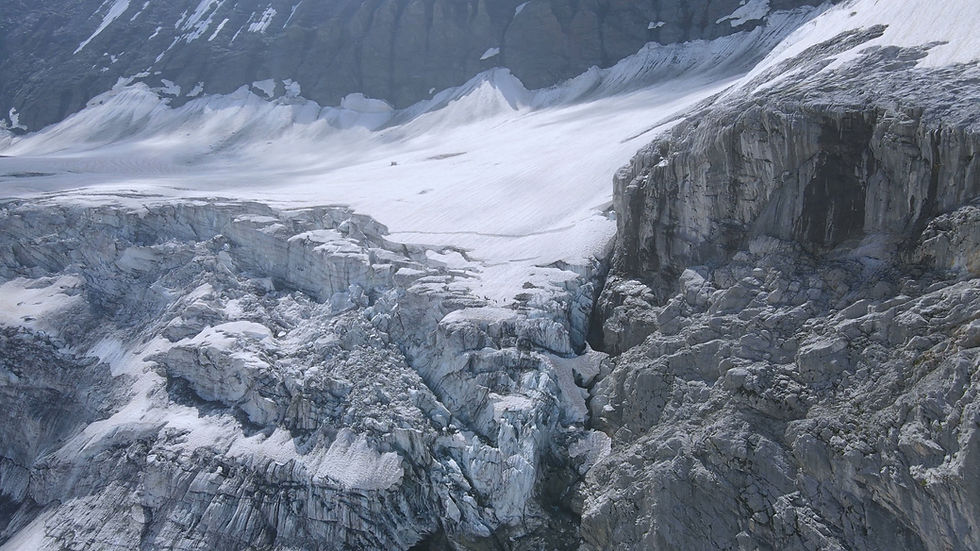
The Science Behind The Ice
Discover how glaciers form, move, and transform the world around them.
What Is A Glacier?
A glacier is a massive body of ice that forms when accumulated snow compresses over many years. Under its own weight, the ice gradually moves downhill, reshaping the landscape as it travels.
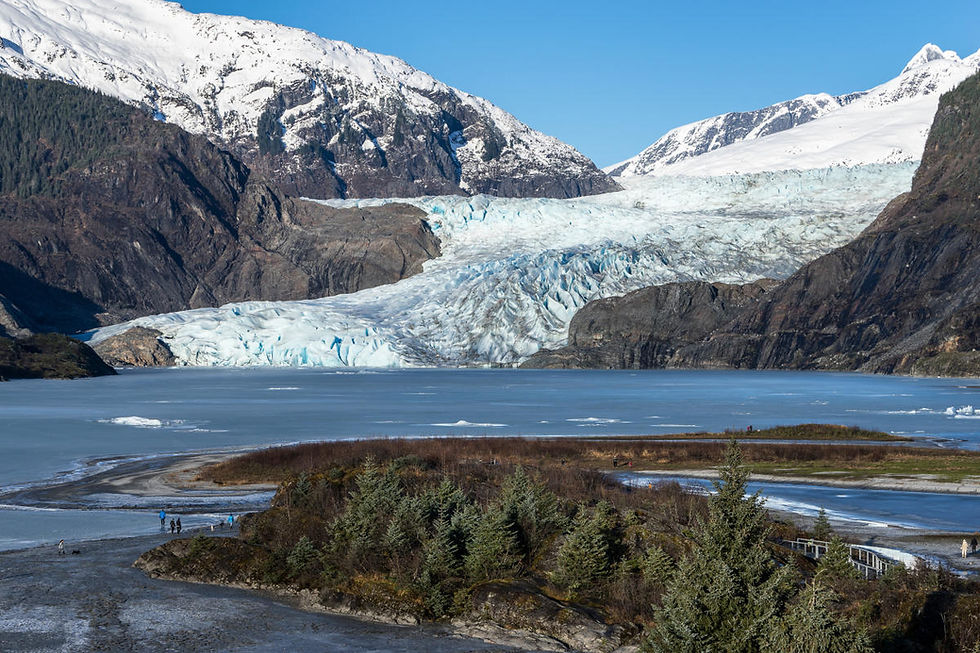
Mendenhall Glacier is an outlet glacier flowing from the Juneau Icefield. Its movement transports ice from the mountains toward lower elevations, where melting and other processes remove ice.
How Do Glaciers Form?
01
Snowfall
Snow accumulates year after year.
02
Compaction
New snow compresses older layers.
Snow becomes dense, granular firn.
03
Firn
Firn transforms into dense ice.
04
Glacial Ice

The Anatomy Of A Glacier
Accumulation Zone
Higher elevations where snowfall adds more ice than is lost over time.
Ablation Zone
Lower areas where melting and other processes remove ice.
Equilibrium Line
The approximate boundary separating net accumulation from net ice loss.
Crevasses
Deep cracks that form as glacier ice stretches and fractures.
Terminus
The lower end of a glacier.
Moraines
Deposits of rock and sediment carried by glacier ice.
How Do Glaciers Move?
Internal Deformation
Ice slowly changes shape under pressure, allowing the glacier to move.
Basal Sliding
Under suitable conditions, glacier ice can slide over the bedrock beneath it, sometimes aided by meltwater.
Fracturing
When the ice stretches faster than it can deform, cracks called crevasses form on the glacier's surface.
The Science Of A Changing Glacier
A glacier's health is often studied through its mass balance—the difference between ice gained through snowfall and ice lost through melting, sublimation, and calving. When a glacier loses more mass than it gains over time, its total ice volume decreases. Scientists monitor these changes to understand how glaciers respond to their environment.